
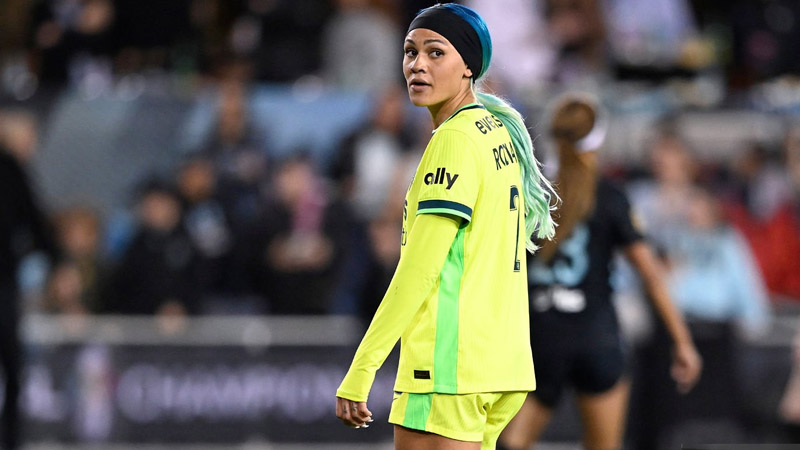
NWSL Blocks Spirit’s Mega-Offer to Trinity Rodman: Commissioner Says Deal Violated “Spirit of the Rules” (Photo by Brandon Vallance/Getty Images)
The Washington Spirit attempted to secure star forward Trinity Rodman with a groundbreaking contract worth more than $1 million per year, but the National Women’s Soccer League stepped in and stopped the deal. According to people familiar with the situation, NWSL Commissioner Jessica Berman rejected the proposed four-year agreement, arguing it went against the spirit of league regulations meant to preserve competitive balance.
The individuals who described the decision were not authorized to speak publicly, but they said Berman viewed the contract as incompatible with the rules designed to prevent owners from outspending one another. The NWSL operated with a $3.5 million salary cap this past season, and while creative mechanisms exist within the system, Berman has previously said that parity is central to the league’s identity and long-term stability.
In earlier public comments, Berman has stressed that allowing clubs to escalate spending without limits would create wide gaps between teams. Her position remained consistent here, even though Rodman is one of the most high-profile players in the sport. Sources said that despite the Spirit’s attempt to structure the deal in a way they believed complied with the collective bargaining agreement, the commissioner determined that approving it would set a precedent the league was not prepared to handle.

A league spokesperson reiterated on Wednesday that the NWSL wants to retain its top athletes and is committed to providing pathways for stars to stay. “Our goal is to ensure that the very best players in the world, including Trinity, continue to call this league home.
We will do everything we can, utilizing every lever available within our rules to keep Trinity Rodman here,” the spokesperson said. Rodman, 23, became a free agent at the close of the season and has drawn significant interest from major European clubs. Her market value has soared, and with several American standouts already choosing Europe for higher salaries and broader opportunities, her future has become a symbol of a larger challenge facing the NWSL.
Clubs abroad are often willing to offer far more lucrative deals than domestic teams can under current league structures. The Spirit’s proposed contract was seen by many around the league as an aggressive attempt to keep one of the brightest young talents in the United States. But the commissioner’s decision quickly triggered a response from the National Women’s Soccer League Players Association.
According to people familiar with the move, the union filed a grievance arguing that the contract was fair and that it fit within the parameters of the existing collective bargaining agreement. They contend the league should have allowed the offer to stand.

So far, the players’ union has not responded to requests for comment. The Washington Spirit declined to discuss the matter, and a representative for Rodman also chose not to comment.
Rodman’s free agency now continues with heightened attention. Her next move will influence how players, clubs, and even international leagues view the competitive landscape for women’s soccer. If she decides to leave the NWSL for Europe, the departure would underscore the tension between maintaining parity and competing for elite global talent.
For now, the league’s stance is clear: while it wants Rodman to stay, it also wants to preserve the financial structure that has guided its growth. Whether those priorities can coexist in the long run remains an open question, and Rodman’s situation has pushed that debate into full public view.
Trinity Rodman hits free agency
A female soccer star appears out of nowhere. On December 31, 2025, Trinity Rodman, a US international, NWSL champion, and 2024 Olympic gold medallist from Paris, became a free agent following the expiration of her Washington Spirit contract.
Being the daughter of former NBA player Dennis Rodman, she has long established herself as one of the best players in the sport, but her competitive spirit is obviously ingrained in her.
The club and league levels are worried about Rodman’s unresolved contract problem since, at 23, she has become one of the most important players in women’s soccer worldwide. The main worry is obvious: the forward may choose to move to Europe or another foreign league, which would be very bad for the U.S. league.
Rodman is currently training independently and preparing for the next season; her future is still uncertain. Knowing full well that losing one of its greatest stars would diminish the league’s appeal and hinder its global momentum, the National Women’s Soccer League has made ensuring her continuation a strategic priority. The league has suggested paying its top players a special salary in retaliation.