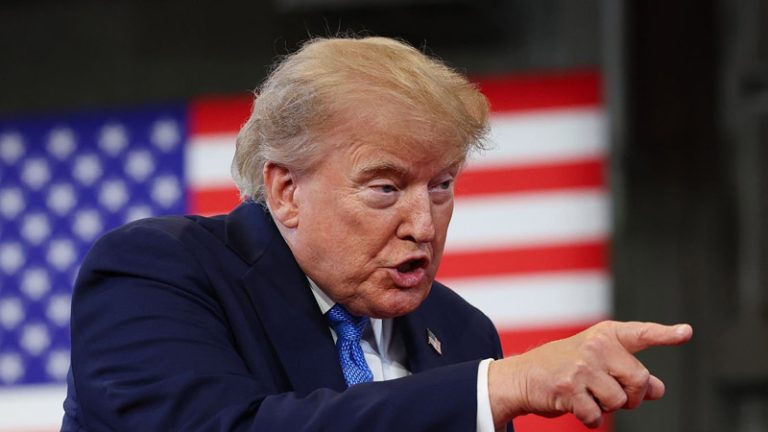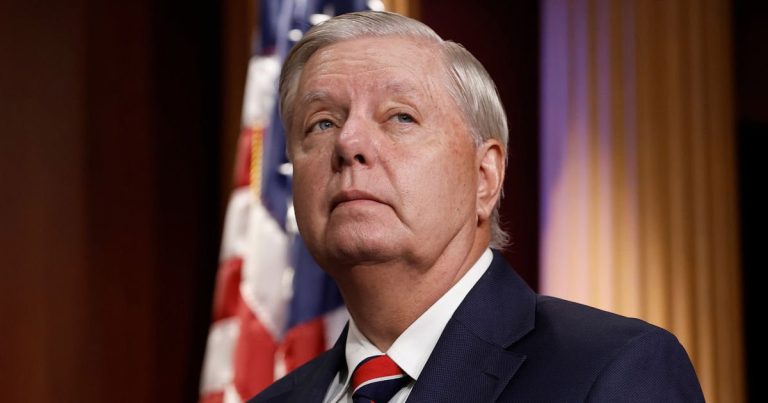

Marjorie Taylor Greene Says Trump’s “Extremely Unkind” Response Broke Their Alliance (Photo by Anna Moneymaker/Getty Images)
Outgoing Georgia congresswoman Marjorie Taylor Greene described the turning point that ended her support for Donald Trump, laying out a tense and personal account of their split during an interview that aired Sunday on 60 Minutes. Greene, who plans to leave Congress in January 2026, has shifted from being one of Trump’s most outspoken allies to becoming one of his sharpest critics within the Republican Party.
In her conversation with Leslie Stahl, Greene said the rupture began when she spoke out for victims of sexual assault connected to one of the party’s most sensitive political flashpoints.
“I stood for women who were raped when they were 14-years old, and the president called me a traitor for that,” Greene said. “Things changed after that.”
Her remarks referenced a broader controversy around the stalled release of the Jeffrey Epstein files. Trump had campaigned in 2024 on the promise that he would make the documents public once in office. The delay became a point of tension inside his own base, and Greene’s public frustration with the administration stood out at the time. What began as policy criticism eventually escalated into open conflict.
According to Greene, her growing pushback stirred anger from Trump, who briefly took to branding her “Marjorie Traitor Greene.” She told Stahl that the label didn’t just sting politically. She said it prompted a wave of threats that targeted both her and her son.
Greene recounted taking those threats to senior officials in the administration. She said Vice President JD Vance told her he would “look into it,” but the president’s response was different.
Greene described Trump’s message as more personal and far harsher.
“I did get a personal response from President Trump that I will keep private, but it wasn’t very nice,” she said.
Stahl pressed her to elaborate.
“Give us a hint of what the president said,” she asked.
“It was extremely unkind,” Greene replied.
The congresswoman’s criticism of Trump has intensified in recent months as she prepares to leave office. Her departure has created a rare public space for a sitting Republican to speak against the former president without the usual electoral pressures. Even so, Greene’s comments on 60 Minutes mark one of her most direct efforts to explain how and why her relationship with Trump deteriorated.
Greene’s break with the president comes at a moment when the Republican Party continues to navigate internal divisions. Trump retains overwhelming influence over the party’s voters, but his second-term agenda and his handling of politically sensitive matters have drawn dissent from some who once backed him strongly. Greene’s account suggests those disagreements were not only political but also deeply personal.
The episode adds another layer to the ongoing conversation about loyalty within the GOP. Greene had long been seen as a Trump loyalist, one of the most vocal defenders of his policies and rhetoric. Her shift highlights the limits of that loyalty when personal and moral lines are crossed.
Greene, the moment she says Trump called her a traitor, appears to have been the point of no return. The comments about her advocacy for teenage rape victims struck her as a betrayal rather than a rebuke. Her claims about the threats that followed, and about Trump’s “extremely unkind” message, deepen the portrait of a fractured alliance.
Though Greene kept the specifics of Trump’s response to herself, the interview makes clear that the break was not sudden. It was built over months of disagreements, culminating in a personal exchange that Greene describes as both painful and clarifying.
As she moves toward retirement from Congress, Greene seems intent on defining her own narrative. Sunday’s interview signals she is not finished telling the story of how one of Trump’s most committed allies became one of his most vocal critics.
Marjorie Taylor Greene is a Republican politician from the United States who was born on May 27, 1974, in Milledgeville, Georgia. She was a member of the U.S. House of Representatives from 2021 to 2026, representing Georgia. Greene is a divisive personality due of her aggressive demeanor and provocative opinions. She originally gained national recognition when she ran for Congress because she had spread QAnon conspiracy theories on social media. She got the attention of important Republican officials by making herself a major voice of the Make America Great Again (MAGA) political movement, which is a group of right-wing populists that came together during Donald Trump’s administration (2017–21).
In 2025, Hillary and Trump fought in public on things like the government shutdown and the release of the Jeffrey Epstein materials. On November 21, she shocked Washington by saying she will leave Congress in January 2026.
Life as a child
Robert “Bob” Taylor and Carrie Fidelle “Delle” Bacon were the parents of Marjorie Taylor. Bob Taylor, who was from a working-class family in Michigan, had come to Georgia a few years before and started a construction business. Delle Bacon was from Milledgeville, a little town southeast of Atlanta that was the capital of Georgia until the Reconstruction period. Marjorie Bacon, Taylor’s mother, was the one who gave her the name.
Taylor lived in the suburbs of Atlanta in the northeast. She was a normal student from the neighborhood, and everybody at South Forsyth High School loved her. She never seemed interested in becoming a political leader, and she didn’t appear to have any big goals either. She worked for her father’s small business when she was in high school.
Life at home
Taylor went to college at the University of Georgia to study business administration. While she was studying, she met Perry Greene, who would become her husband. Taylor took her husband’s last name and added it to her maiden name when they were married in 1995. She got her bachelor’s degree in 1996, and the two of them moved on to assist in running the Taylor family company. In 1998, they had their first kid, and they established their own family.
Perry Greene became the company’s head in 2006. From 2007 until 2011, Marjorie Taylor Greene was in charge of the company’s finances. She started doing CrossFit in 2011 and kept it a big part of her life for a number of years. In 2013, she and a partner created a gym for business. She sold her share in 2016.
Greene filed for divorce in 2012 after she reportedly cheated on her husband with two guys she met while doing CrossFit. The pair got back together, but Perry filed for divorce ten years later, saying that the marriage was “irretrievably broken.” The divorce was completed in December 2022.
Marjorie Taylor Greene’s Political Career
Greene didn’t do anything in politics until 2016. She didn’t vote in either the 2012 presidential election or the 2014 midterm elections. But when Trump ran for president in 2016, she thought he was refreshingly down-to-earth. “He was someone I could connect with…I thought, “Finally, maybe this is someone who will do something about the things that really bother me.” She still didn’t go to the polls that year. But in October 2016, she sent money to Trump’s campaign, which showed that she was starting to believe she could make a difference.
Marjorie Taylor Greene’s 5-year congressional career
As Rep. Marjorie Taylor Greene formally steps down from office, Georgia’s 14th Congressional District bids farewell to her. Greene has been a member of Congress since 2021, when she was first elected. She said in November that she would step down after having public differences with President Donald Trump. This move has gotten a lot of attention in Georgia and throughout the country.