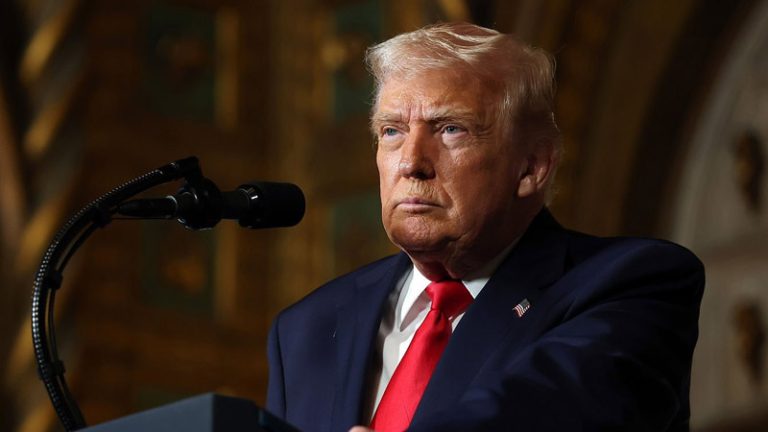

Donald Trump and first lady Melania Trump attend the 48th annual Kennedy Center Honors at the Kennedy (Photo by Allison Robbert/Getty Images)
A former federal prosecutor sharply criticized President Donald Trump on Monday night, calling his latest presidential pardon the “most callous and craven” one yet. The remarks came after Trump issued a surprise pardon last week to Rep. Henry Cuellar (D-TX), who had been facing charges of money laundering and advancing the interests of Azerbaijan during the Biden administration. Cuellar’s trial had been set for April 2026, but the pardon abruptly halted all proceedings.
The political fallout intensified over the weekend when Cuellar appeared on Fox News. He was asked whether he planned to run for re-election as a Republican now that he had aligned himself with Trump on several issues. Cuellar said he intended to run as a conservative Democrat who is willing to work with the president. That response clearly irritated Trump, who expected a deeper political shift after granting the pardon.
Trump vented on Truth Social shortly after Cuellar’s interview aired. “Such a lack of LOYALTY, something that Texas Voters, and Henry’s daughters, will not like,” he wrote. “Oh’ well, next time, no more Mr. Nice guy!” His reaction fueled accusations that the pardon may have been tied to political expectations rather than justice.
Former Justice Department prosecutor Glenn Kirschner weighed in during a new episode of “The Legal Breakdown” with YouTuber Brian Tyler Cohen. Kirschner argued that the situation raises serious legal concerns. He said Trump’s expectation that Cuellar would switch parties after receiving a pardon fits a pattern that could carry criminal implications.

“It’s one of many potential crimes that Donald Trump commits when he corruptly delivers a pardon expecting to get something in return for that official act that he took of delivering a pardon,” Kirschner said. He noted that the Constitution grants broad presidential pardon power, but using it for personal or political gain can cross into criminal territory.
Kirschner added that what Trump wanted from Cuellar was political loyalty that would ultimately help him retain control of the House of Representatives. “And what he wants is political loyalty in return that will enure to his personal benefit because he obviously wants to continue to keep the House of Representatives in Republican hands and this is now going to thwart his efforts in that regard,” he said.
He argued that the pardon represents “political corruption of the most callous and craven” variety. Kirschner went further, saying the move likely violates several federal statutes, including those governing bribery, honest services fraud, and misuse of public office.
The controversy adds another layer to Trump’s long-running clashes over the boundaries of presidential power. Cuellar, meanwhile, is now entering a re-election fight under extraordinary circumstances. His decision to remain a Democrat despite the pardon leaves both parties recalibrating their political strategies in Texas.
As legal analysts, lawmakers, and ethics watchdogs digest the implications of the pardon, the debate over whether Trump crossed a legal line is likely to intensify. For now, the episode highlights once again how presidential pardons can become entangled with political calculations and how those entanglements continue to spark fierce criticism from legal experts.
Pardons, Criminal Theory, Political Sociology
The presidential pardon is one of the broadest, opaque, and abuse-prone governmental powers. Transactional politics replaced impartiality in this authority under Donald Trump. Pardons are incentives for loyalty, self-interest, and political revenge. They show fealty, not charity or justice.
I shall make two relevant remarks on Donald Trump’s exceptional executive pardon. The first is from my academic specialty, criminal law philosophy. The second is from my rookie political sociological perspective. Even though I can’t use my academic background, I think sociology explains this problem better than philosophy. I end with some remarks on the social implications of this problem for legal philosophy.
The political sociology of Trump’s pardons
My second and more telling aspect of Trump’s approach is sociological. Trump uses the pardon authority to represent a wider ideology that many MAGA supporters share. He is doing what they think all politicians have done, using public authority for private gain more brazenly and successfully. Much of what Trump has pardoned does not surprise his fans and fits with his objectives.
This view holds that criminal justice, like all politics, is transactional, enabling authorities to reward friends and punish foes. This cynic sees pardons for allies and not for opponents as nothing new. Trump is just better than his predecessors.
My (not unique) sociological view is that Trump would not be able to pardon in such a political manner without his numerous helpers. Either they share his vision or fear speaking out against it. His MAGA crowd is his biggest enabler, eager to ignore or excuse almost everything Trump says or does.
His media friends “Foxsplain” any doubts about his actions and convince viewers that Trump is exceptionally successful in making America great. Republican politicians can resist, but a primary challenge prevents them. With presidential power expanding, Congress has deferred to Trump and abandoned its role.