(Photo by Chip Somodevilla/Getty Images)
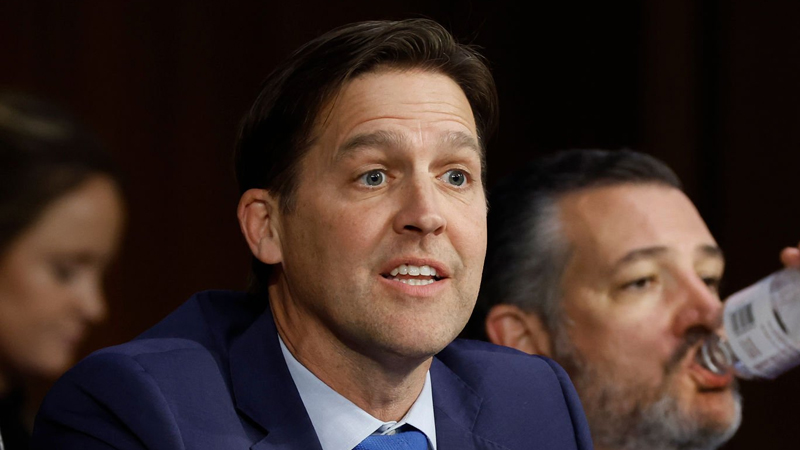
On Tuesday, former U.S. Senator Ben Sasse shared devastating news with the public, disclosing that he has been diagnosed with Stage 4 pancreatic cancer. The 53-year-old Nebraska Republican said he learned of the diagnosis just last week and decided to make the announcement publicly after noticing worry among his friends and supporters.
“This is a difficult message to write,” Sasse opened his statement, “but because so many of you have started to suspect something, I’ll cut to the chase.” He then delivered the news directly: “Last week I was diagnosed with metastasized, stage-four pancreatic cancer, and I’m going to die. It’s a horrible, fatal disease. But the truth is, my death sentence was issued the day I was born. The same is true for all of us.”
Characteristically, Sasse combined stark honesty with a touch of grim humor, centering his thoughts on his closest relationships. “I’m blessed with amazing siblings and half a dozen friends who are truly like brothers,” he wrote. Quoting a close friend’s perspective, he noted, “Sure, I’m on the clock, but we’re all on the clock. Death is a cruel thief, and that bastard is stalking every one of us.”
Despite the grim diagnosis, Sasse’s determination came through clearly. “I’ll have more to say,” he stated. “I’m not going down without a fight.” He found reason for hope in medical progress, viewing it as evidence of something greater. “One glimpse of God’s kindness can be seen in the breathtaking advances we’ve made in immunotherapy and other treatments,” he observed. For Sasse, an important distinction remains: “Death and dying aren’t the same. The process of dying is still something to be lived.”
His family, he explained, is facing this challenge in their own way. “We’re leaning hard into gallows humor at home,” he shared, “and I’ve pledged to do my part to run through the irreverent tape.” Sasse departed the Senate in 2023 after serving two terms, citing dissatisfaction with political gridlock and a desire for a different direction. He took on the presidency of the University of Florida briefly before leaving that position as well.
That earlier exit was driven by family needs; his wife, Melissa, was dealing with a new epilepsy diagnosis and memory issues. Now confronting his own medical crisis, Sasse described how their family connections have grown stronger in recent months. He wrote about becoming closer to his wife and observing his children’s lives with great pride, indicating the diagnosis has brought clarity about what matters most.
“There’s never a right time to tell your people you’re now marching to the beat of a faster drummer,” he observed. “But the Advent season isn’t the worst. As a Christian, these weeks before Christmas are when we turn our hearts toward the hope of what is to come.”
Following his brief tenure as university president, Sasse continued his involvement with the campus, teaching classes at the university’s Hamilton Center. His career has moved between higher education and government, including positions as a professor at the University of Texas, an assistant secretary at Health and Human Services, and president of Midland University in Nebraska.
In revealing his diagnosis, Sasse becomes part of a somber pattern among Senate members; former Majority Leader Harry Reid died from the same cancer in 2021 after battling it for four years. Pancreatic cancer stands as one of medicine’s most challenging adversaries. Yet Ben Sasse’s announcement was far from a concession. It combined unflinching realism with resolute strength, presenting his diagnosis not simply as a conclusion, but as a stark reminder: a summons to embrace faith, cherish family, and live with intention during whatever time remains.