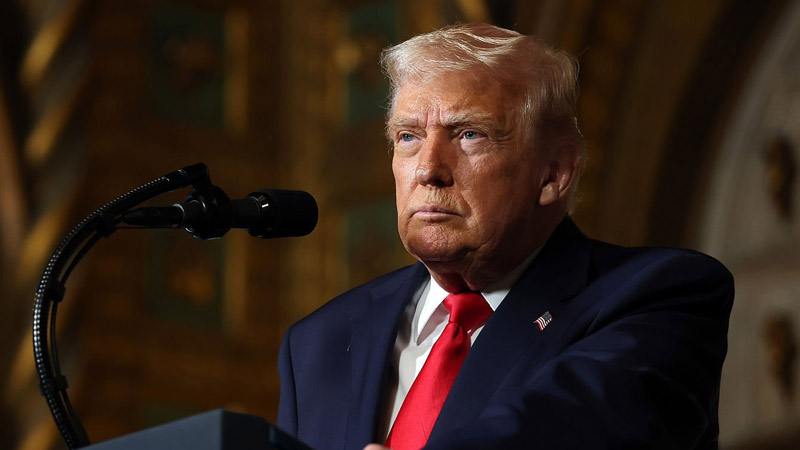
Trump Highlights Alleged Fraud in Minnesota (Photo by Tasos Katopodis/Getty Images)
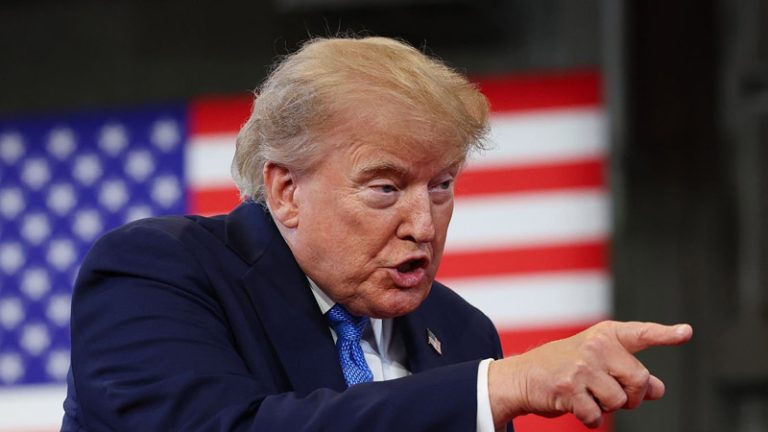
In a brief but pointed New Year’s Eve appearance before supporters at his Mar-a-Lago resort, former President Donald Trump aggressively promoted unverified allegations of massive social services fraud within Minnesota’s Somali community, a move that political observers note effectively shifts the spotlight from newly released court documents detailing his past associations with the late financier Jeffrey Epstein.
The controversy Trump amplified centers on claims made by a right-wing YouTuber, who alleged discovering $100 million in childcare fraud at a network of Somali-run centers in Minnesota. Notably, all the cited centers had already been shut down by state authorities for compliance issues prior to the viral report. A leading Minnesota Republican has since confirmed he steered the content creator toward these specific facilities, injecting partisan politics into the ongoing administrative review.
“We are back!” Trump declared to the cheering crowd. “I didn’t think it could happen so quickly, but it did. Faster than anybody imagined conceivable.” He singled out U.S. Representative Tom Emmer (R-MN), the House Majority Whip, for praise, stating, “I watched him on television today… He was talking about the Somalia hoax. He was talking about the Somali people, and not very pleasantly.”
Trump’s focus on these allegations marks a strategic pivot for his campaign and inner circle. The remarks came just days after a trove of documents from a civil case related to Epstein was unsealed, including mentions of Trump. While the documents do not accuse Trump of illegal activity, they recount social interactions and have fueled renewed media scrutiny of his past relationship with the convicted sex offender.
By championing the Minnesota fraud narrative, Trump redirects his supporters’ attention toward a politically charged issue involving immigration, public benefits, and crime, core themes of his political brand.
“We’re going to take back our country,” Trump continued, dramatically inflating the scale of the alleged fraud. “Can you believe they took $18 billion? That’s exactly what we’re learning.” He then dismissed that figure as “peanuts,” using it as a springboard to attack Democratic-led states. “California is terrible. Illinois is worse. And, unfortunately, New York is worse,” he said, painting a broad picture of systemic corruption in areas outside his political control.
Context and Reaction
The actual situation in Minnesota is complex and far less sensational than portrayed. The state’s Department of Human Services (DHS) has been conducting a lengthy investigation into irregularities within its childcare assistance program, a system that saw explosive growth and inadequate oversight during the pandemic.
Fraud has been identified across communities, but the scale remains unconfirmed and is a subject of bipartisan legislative concern aimed at reforming the system. The targeting of Somali-administered centers, however, has raised alarms among community leaders and advocates about ethnic scapegoating and the stoking of anti-immigrant sentiment.
“This is a deliberate attempt to smear an entire community for political gain,” said Jaylani Hussein, executive director of the Minnesota chapter of the Council on American-Islamic Relations (CAIR). “While accountability for any fraud is necessary, turning it into a racial and religious wedge issue is dangerous and dishonest.”
Political analysts see Trump’s remarks as a classic example of his communication strategy: identifying a culturally resonant grievance, amplifying it through media allies, and presenting himself as the sole figure willing to confront it, all while deflecting from negative stories.
“The Epstein documents are a reputational threat, reminding swing voters of Trump’s brash, pre-political life in New York society,” said Dr. Evelyn Chen, a political science professor at the University of Florida. “The ‘Somali fraud’ narrative serves a dual purpose: it fires up his base with a story of ‘us versus them’ and wasteful government, and it completely changes the channel for the conservative media ecosystem. It’s distraction through confrontation.”
As the 2024 campaign intensifies, this episode underscores how unverified claims, particularly those targeting minority communities, can be rapidly weaponized within the political arena. The focus in Minnesota remains on fixing a broken system, but on the national stage, the story has been reframed as a potent political symbol.