
MLB Players Brace for Chaos After Union Shakeup (Photo by Getty Images)
There has never been a more stressful time for the labor landscape of Major League Baseball to be completely upended. Following Tony Clark’s resignation the previous day, Bruce Meyer was overwhelmingly chosen by the Major League Baseball Players Association on Wednesday night to serve as its new executive director.
Less than a year before MLB’s collective bargaining agreement is slated to expire, Clark’s departure occurred amid controversy, which is essentially the greatest pressure point imaginable. Meyer, who was formerly the union’s deputy executive director, will step in temporarily.
This indicates that he is taking over at a time when owners are openly planning to lock out players beginning December 1st if no new deal is reached, and are pushing for a wage cap. Players are already preparing for the prospect of a protracted work stoppage.
The executive board of the MLBPA, which consists of 72 players, cast the vote. That comprises 34 minor league players and 38 big league players. Additionally, the board promoted Matt Nussbaum to interim deputy executive director, per the Associated Press.
Some players considered Nussbaum, the union’s general counsel, as a potential contender for the top position, but in the end, the group came together to support Meyer. The board had just refused to vote on a new executive director the day before, when it made that decision.
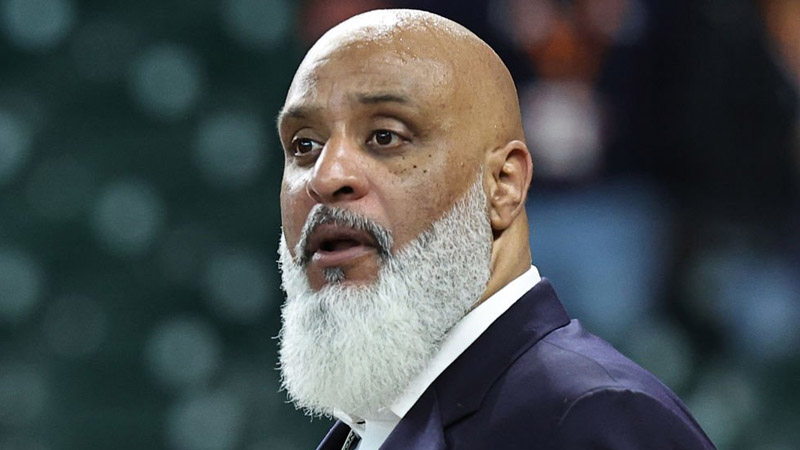
Since his hiring in 2018, Meyer has grown to play a significant role within the union. Following a highly criticised labour agreement negotiated the previous year, he assumed leadership. He was the primary negotiator during the COVID-19 pandemic and instrumental in negotiating the labour agreement reached in 2022 after a 99-day lockout.
Meyer, who has worked for the NFL, NBA, and NHL players’ organisations, is now the sixth executive director of the MLBPA. After an internal probe revealed an improper connection with his sister-in-law, who was employed by the union in 2023, Clark resigned on Tuesday.
A federal investigation into the MLBPA’s finances and governance prompted the union to engage an independent attorney, whose research revealed the connection. Even if player leaders were already preparing for Clark’s exit, the timing was still devastating.
It took place on the same day that he was scheduled to speak to the Cleveland Guardians at the union’s first stop on their tour of all 30 camps. Meyer and Nussbaum were already in charge of meetings by Wednesday morning, including one with the Kansas City Royals, when they reaffirmed the union’s long-standing opposition to pay caps.
“Our position and the historic position of this union for decades on the salary cap is well-known,” Meyer said. “It’s the ultimate limitation. It is something that owners of all sports, particularly baseball, have desired above everything else. There’s a rationale for that: it’s better for them than for the players.”
Meyer has gained support for his harsh attitude, despite several players calling for his dismissal as deputy executive director two years ago. Clark helped keep him on the job, and Meyer has since been preparing for what may be MLB’s largest labor dispute since the 1994 strike that ended the World Series.
“We have a duty to the players and otherwise to listen to anything the league offers,” Meyer said. “We will evaluate and analyse any offers,” he said. “A lockout is almost guaranteed at the end of the agreement.” “The league has very much said that. Their negotiation tactic has always been to exert as much pressure on players as possible in order to create splits and fissures within our membership. It has never worked. “I don’t believe it will ever work.”
Tony Clark Scandal
Meanwhile, commissioner Rob Manfred has been rallying support from owners at all economic levels. He has insisted, both publicly and privately, that the Dodgers, who appear to set new spending records and win the World Series every year, pose a threat to the league.
He has even presented that idea to players on his yearly clubhouse visits, hoping that debates about competitive balance may stimulate their interest. (That last tactic yielded mixed results, but you have to give the guy credit for trying.)
Clark’s dismissal may, as players and the union argued Tuesday and Wednesday, have no effect on bargaining, which is set to resume this spring. “I’m not going to say this is a great thing,” Meyer said. “But at the end of the day, bargaining is the most important thing.”
That will be Meyer’s responsibility regardless of who heads the union. Finally, Meyer answers the players. In its announcement of Clark’s departure, the organization stated, “The strength of this union is and will always be—the solidarity of our membership.” It had best be. This is certainly not leadership.