
(Photo by Buda Mendes/Getty Images)
FIFA has been slapped with a court injunction over its ticketing practices just days before the 2026 World Cup wraps up.
A court in Frankfurt, Germany, ordered soccer’s global governing body this week to stop “facilitating ticket sales” in ways the petitioner—European online ticket resale platform Ticombo—labeled “manipulative.”
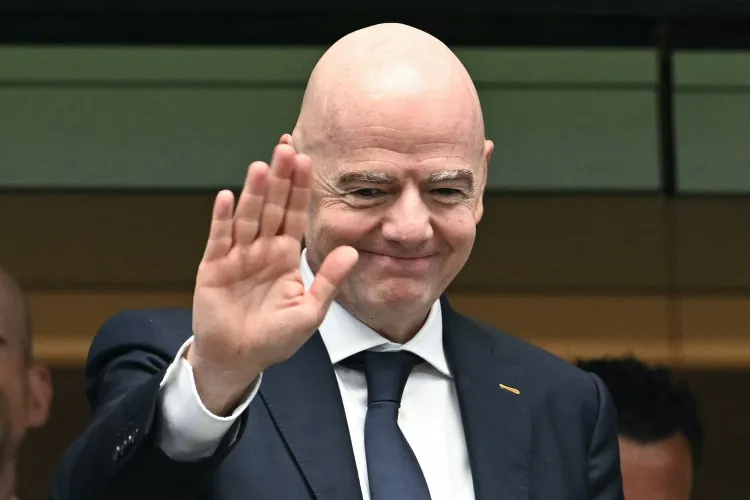
The preliminary injunction carries a potential fine of up to €250,000 ($287,000) per violation, or “imprisonment for up to six months,” aimed at FIFA President Gianni Infantino and Secretary General Mattias Grafström.
“Ticombo initiated this legal action to establish that transparency, fairness, and consumer rights must remain central standards in the ticketing industry, including for the world’s largest sporting events,” the Berlin-based company said in a statement on Tuesday.
“We take consumer protection and transparency very seriously and believe that all players must abide by the same rules,” Marçal Gutiérrez, legal counsel for Ticombo, told Newsweek. “This is why we took action.”
FIFA has not responded to the court order and did not attend the proceedings, according to The Guardian. This year’s tournament—which concludes Sunday when Argentina faces Spain in the final at MetLife Stadium in New Jersey—has been dogged by criticism over high ticket prices and murky ticketing practices.
FIFA has attributed the steep prices to overwhelming demand, but the issue has drawn fire from politicians, sparked lawsuits from fans, and prompted investigations by host-city officials.
In late May, New York Attorney General Letitia James and New Jersey Attorney General Jennifer Davenport subpoenaed FIFA as part of a joint probe into its ticketing system. Davenport accused FIFA of turning the ticket-purchasing process into a “gauntlet of confusion, fake scarcity and impossibly high prices.”
An announcement from the New York AG’s office noted that “recent press reports indicate that fans may have been misled about the locations of the seats they were purchasing, and FIFA’s public statements and ticket releases may have contributed to soaring prices.”
Samuel A.A. Levine, commissioner of New York City’s Department of Consumer and Worker Protection, said FIFA may have violated U.S. consumer protection laws as a result. Ticombo’s complaint alleges FIFA failed to disclose the “identity and address of commercial sellers” on its resale market.
“While FIFA has marketed its platform as a fair ‘fan-to-fan’ exchange, it systematically concealed the identity and any possible trader status of its sellers,” the company said, adding that this allowed “commercial entities to operate as undisclosed traders selling ticket allocations at heavily inflated prices.” Ticombo also cited “a combination of manipulative design features,” including “bait-and-switch pricing.”
Though the ruling only applies in Germany and comes too late to affect this tournament, Ticombo says it will keep pressuring FIFA ahead of the 2030 World Cup, co-hosted by Morocco, Portugal, and Spain. Its legal counsel said the company is “not seeking monetary compensation.”