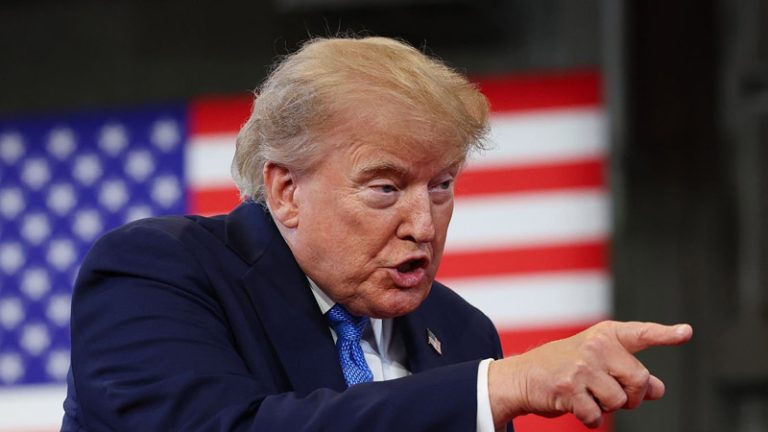
(Photo by Samuel Corum/Getty Images)
President Donald Trump declared a national emergency Wednesday over foreign-made electrical equipment that his administration says could expose the United States’ bulk-power system to sabotage, unauthorized access and severe operational disruption.
The declaration came through an executive order intended to protect “the security, integrity, and reliability” of electric equipment used in the country’s bulk-power system, according to the White House.
The order describes the issue as an “unusual and extraordinary foreign threat to the United States involving bulk-power systems produced abroad that may present national security vulnerabilities.”
Under the directive, certain foreign-made electrical components could be barred from being purchased or installed in the United States. The restrictions also cover critical software and digital capabilities associated with the equipment when officials determine that they could create cybersecurity or operational dangers.
The White House said the order “generally prohibits certain foreign-produced bulk-power system electric equipment, including associated critical software and digital capabilities that could pose cybersecurity or operational risks, from being purchased or installed in the United States.”
The restrictions focus on transactions involving foreign nationals when those dealings create an “undue risk of sabotage, unauthorized access or other disruption.”
They also apply to equipment posing an “undue risk of catastrophic effects on the security or resiliency of U.S. critical infrastructure, or an unacceptable risk to the security of the U.S.”
The administration linked the emergency action to the rapid growth of artificial intelligence, advanced manufacturing and defense production. It said those sectors have increased the country’s need for dependable electrical infrastructure while also expanding reliance on components manufactured outside the United States.
The order establishes two main lines of action. First, it seeks to prevent equipment considered dangerous from being purchased or added to the bulk-power system. Second, it directs federal officials to identify potentially risky equipment and recommend additional measures to address security concerns.
Those reviews are expected to examine both physical electrical components and the software or digital controls associated with them. The White House argues that weaknesses in either area could provide a route for foreign actors to interfere with essential power operations.
Federal officials have been instructed to develop recommendations aimed at preventing overseas actors from “crippling critical infrastructure.”
The emergency declaration gives the administration a framework for imposing tighter federal controls on specified transactions and installations.
The White House presented the order as a preventive national security measure. Its stated aim is to reduce the possibility that imported equipment or connected digital systems could be exploited to disrupt electricity supplies.
Reliable power is particularly important to AI operations, advanced manufacturing and defense production. The administration argues that protecting the bulk-power system is essential to the security and resilience of those sectors.